
Tortilla con Sal, March 9th 2025
"Una vez que uno reconozca la situación por lo que es, uno puede responder a ella, y si la situación bloquea el progreso, resistirlo y trabajar buscando otras vías para avanzar"
Compañero Alex Cox is a British filmmaker, now based in North America. For the general public, he may well be best known for two films Repo Man (1984) and Sid and Nancy (1986) produced within the North American studio system as well as a whole series of independently produced films and his very popular and influential British television series "Moviedrome". In fact, Alex Cox considers his film about the filibuster William Walker ("Walker" 1987) his best film. It was a unique film for its time, highly accomplished and innovative with outstanding actors and a great soundtrack by the rock musician Joe Strummer The big studios of the American film industry boycotted Alex Cox after the film about William Walker because of his obvious sympathy with the Sandinista Popular Revolution.
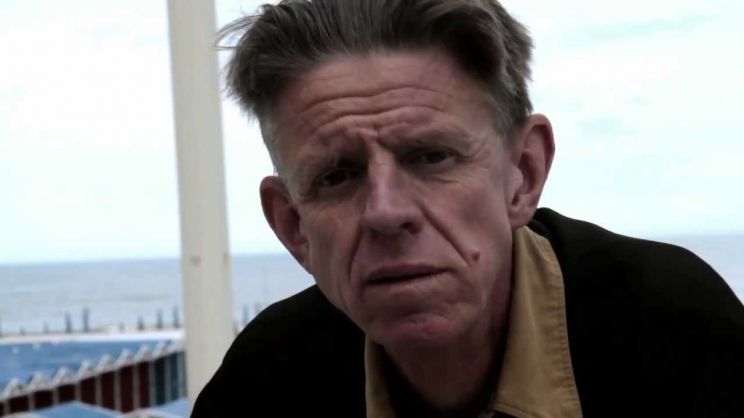
Tortilla con Sal: For us in Nicaragua, the figure of William Walker represents the very essence and embodiment of yankee imperialism - how do you see William Walker and has your sense of him changed since you made your film about him?
Alex Cox: What I find most interesting and astonishing and alarming is that in the West, nothing changes.
William Walker represented a stern calvinist crusader operating on behalf of big business. In the 1920s Smedley Butler played the same role in Nicaragua, but came to his senses and rebelled against his paymasters.
When we made our film in the 1980s, Oliver North fit the bill (though, being more of a weekend warrior, he never set foot in Nicaragua). Today one of the people playing that role is US Secretary of 'Defense' Pete Hegseth, a stern calvinist tee-totaller with crusader tattoos. So my sense of Walker hasn't changed at all. He was simply part of a pattern.
Ed Harris, the actor who played Walker so brilliantly, pointed this out in his imporovised speech in the Managua Cathedral, at the end of the film.
Tortilla con Sal: Has your sense of Nicaragua changed?
Alex Cox: What do I know of Nicaragua? I haven't visited your country since we finished editing the film. My memories are of amazing people, verdure, beauty, heat, endurance. The lands of mainstream media are the lands of forgetting, and one can only have a true sense of a place or a person by being there, or being with them. So I look forward to returning.
Tortilla con Sal: What did making the film about William Walker, which I understand you have considered to be your best film, come to mean for you in terms of both your professional career and your own personal and political development?
Alex Cox: Looking back on the production, it was an amazing thing. Two young guys - me and Lorenzo O'Brien, the producer - managed to spend five million dollars of an American studio's money in Nicaragua, in a time of war, and tell the story of William Walker - not only to the Nicaraguans who already knew it, but to the Americans, and the world.
We did this in collaboration with hundreds of people: Nicaraguans, Mexicans, Americans, English, government officials, church officials, actors, cinematographers, designers, builders, sound recordists, drivers, extras, workers... and a uniquely talented composer.
And all that work was done in Nicaragua. It was a unique experience. Looking back on it now, Lorenzo and I are more than a little surprised we pulled it off. Successfully making Walker in Nicaragua set his career back twenty years, and got me blacklisted by the American studios for life. But you know what? Like the guy in the Peckinpah movie said, I wouldn't have it any other way.
If I had stayed in Los Angeles I would have been miserable. I might have become a Hollywood director, making Schwarzenegger films and Marvel comix. I would be rich, and probably dead of a heart attack. Instead I was cut loose by the "industry" and wandered around the world, looking for money for films, and places to make them.
I've directed a film about the Mexican Highway Patrol, a Jacobean Revenge Drama, a re-imagining of the Birth of Jesus, three Westerns, a science fiction film, a road movie... My experience in Nicaragua set me on this path, and my work has been enriched by it, I think - by the way every film was its own struggle, in its own time and place, for its own reasons.
Tortilla con Sal: It's hard for us in Nicaragua to appreciate the difficulties facing people of revolutionary anti-imperialist convictions in the US and Canada - how important for you are the revolutionary processes in Cuba, Nicaragua and Venezuela?
Alex Cox: They are super-important, to me, and to you, and to millions of people all over the world. These three nations represent a vibrant, viable alternative to the dominant neoliberal/neoconservative nightmare. Cuba, Nicaragua and Venezuela are testaments to the importance of the nation state, as the only guarantor of its citizens' interests. Sanctioned and terrorized, they remain beacons of independent politics and thought whose influence extends far beyond their borders. Their revolutions all point towards autarky - something to which free nations must inevitably aspire.
Tortilla con Sal: Intellectual and cultural production over the last century has progressively become increasingly weaponized to the point where now all information production seems to have been subsumed into pyschological warfare of one kind or another - in your interview last year with Michael Fox you recalled how you saw initial US media sympathy for the Sandinista Revolution reverse completely in a matter of weeks or even days - how has witnessing that, together with your own subsequent experience, changed the way you think about your own intellectual and cultural production?
Alex Cox: I learned pretty quickly that one can only operate in the circumstances in which one finds oneself. Wishing things were different, or pretending they are different, will inevitably lead to inaction and failure.
Once you recognise the situation for what it is, you are able to respond to it, and if it impedes progress, to resist and work around it. You and I grew up in England in the 60s and 70s, I think. What a different country it was then! We had a genuine Labour Party, part of the Socialist International. Britain had socialist policies, with free health care, free education. Water, power generation, the post office and the telephone lines were owned by the state - that is, by us, the people. The airlines and railways had failed as businesses, and been nationalized by the state. We owned them, too.
Since the 1970s we have seen the destruction of socialism in England and across Europe, and the imposition of a neo-liberal/neo-conservative monolith, where everything is for sale, and we are endlessly at war. In the US two parties vie for the approval of the oligarchs.
Yet never and nowhere in my life have I seen such homelessness and destitution. Tomas Borge talked about a prolonged popular war. I think we are in a prolonged popular struggle to defend and advance the rights of people who are not oligarchs, or their managerial supporters.
Socialism has never been destroyed, it has only been pushed back and delayed in certain countries. One of the freedoms offered by socialism is the opportunity to change professions, to quit your job and not starve.
Austerity and scarcity are not natural; they are imposed. Bad movies and media are not natural; they too are imposed.
There is much to rebel against! And even more to build.