
Stephen Sefton, January 1st, 2024
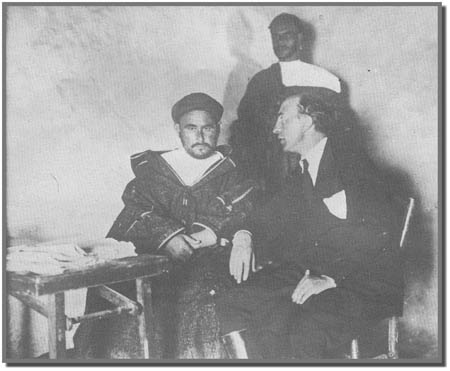
Abd El-Krim El-Kattabi with a Spanish journalist
There are many antecedents to the genocidal colonial war of the Zionist regime now underway against the Palestinian people. The brutal Zionist massacre of more than 20,000 civilians is a desperate reaction to the transformative power of the bold Palestinian military offensive last October 7th against elite units of the Israeli occupation army. Its impact has been similar to that of the 1921 Battle of Annual in the Rif region of what is now Morocco. In the Battle of Annual, which lasted several weeks, the rebel forces against Spanish colonial rule, led by Abd el-Krim el-Khattabi, destroyed an army of more than twelve thousand Spanish troops.
Historian Youssef Girard has observed: "For Spain, Annual was one of the most serious defeats in its history. The Spanish troops had not only suffered a defeat, but had lost face to an enemy judged technically and racially inferior. In a world marked by racist and ethnocentric prejudices, Annual was a symbol: it was that of the victory of people of color over a nation of whites; it was the erasure of the Cross by the Crescent; it was the revenge of the East on the West." The parallels with the impact of the offensive of the Palestinian militias last October against the Zionist occupation forces are clear.
Apart from its historical significance, the Battle of Annual was one more example of how a militarily inferior force can overcome a much more powerful enemy through asymmetric warfare and guerrilla warfare. In the end, to defeat the guerrilla force of Abd el-Krim, it was necessary to deploy together the armies and air forces of Spain and France with more than 250,000 troops. During his visit to Cairo in 1959, Che Guevara met with Abd el-Krim el-Khattabi, since he had learned of Abd el-Krim's struggle through the former Spanish general Alberto Bayo who gave tactical classes to Cuban guerrillas in Mexico. Bayo considered Che “his best student” and in his classes he taught “how a guerrilla should act to break an encirclement, starting from the way that the Moroccans of Abd el-Krim, in the Rif war, broke the Spanish encirclements".
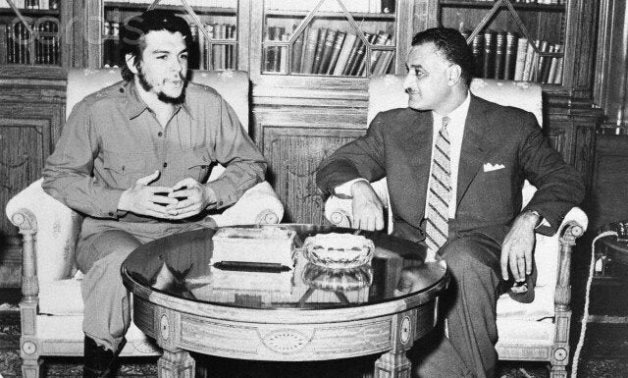
Che Guevara with Egyptian President Gamal Abdel Nasser
Che's meeting with Abd el-Krim el Khattabi is yet another of the multiple continuities between the anti-imperialist struggles of the peoples of the world, which are still going on today in the most intense way in Palestine but also, for example, in the territory of the people of the Saharawi Arab Republic. Che's visit to Cairo in 1959 was part of an effort by the diplomacy of revolutionary Cuba at that time to establish relations with the newly independent African nations. Che returned to the continent several times between 1963 and 1965 to meet with leaders of anti-colonial struggles such as Agostinho Neto from Angola and Amilcar Cabral from Guinea and to visit, among other countries, Ghana, Mali and, again, Egypt and Algeria. In Algeria in 1965 he gave his famous speech at the Afro-Asian Solidarity Economic Seminar calling for greater integration of socialist countries in the struggles for independence.
It is easy to forget that the struggle for Algerian independence was marked by a brutal genocidal policy on the part of the French authorities and colonists. In 1945, the French killed up to 45,000 Algerian civilians between the two months of May and June, in retaliation for attacks by the local population of Setif, Guelma and Kherrata after the murder by the colonial security forces of a child for carrying an Algerian flag on a march. Now, in the most recent Zionist genocidal episode, almost three months after the endless massacres of Palestinian families, it is estimated that there are almost 30,000 civilians, including children, women and men of all ages, dead or missing under the rubble left by the bombings. So the brutality of the Zionist occupying forces in Palestine follows the same sadistic pattern as the brutality of the French occupying forces in Algeria.
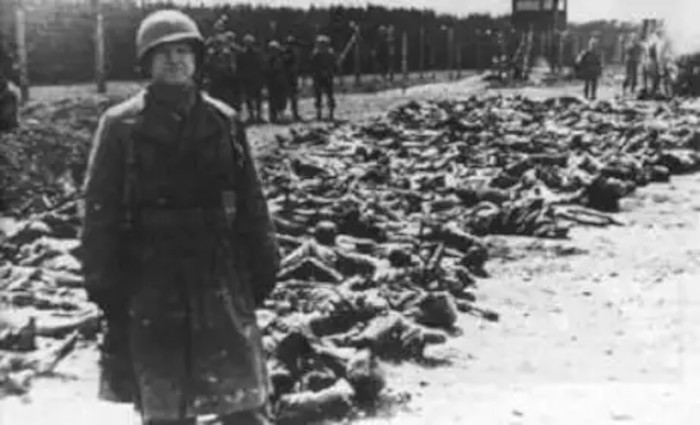
A French soldier stands beside hundreds of Algerian civilians massacred in Sétif
The full start of the Algerian war of independence was in November 1954, nine years after the Setif massacres. The war lasted for eight years, passing through several stages with a progressive increase in the levels of violence on the part of the National Liberation Front, the largest and most effective armed organization among several organizations that fought among themselves to lead the movement for independence. In 1956 the French National Assembly, with the support of the French Communist Party, approved what they called "special powers" to intensify colonial repression through the use of torture (which had already been a long-standing routine practice) and other extreme measures against the civilian population of Algeria. In that year the number of regular French troops reached 400,000 plus 170,000 Algerian troops, then increased by about 180,000 members of the so-called harkis, irregular militias of Algerian volunteers under the command of the French military.
It is estimated that during the Algerian War of independence, French forces killed more than one million Algerian women and men, destroyed 8,000 villages and displaced two million Algerians from rural areas to concentration camps. Despite the intensity of the military conflict, the French authorities never admitted that the conflict was a war, calling it instead an anti-terrorist police operation. The war caused a deep psychosis in public life in France that could not assimilate the open contradiction between its hollow rhetoric of democracy, freedom, equality and fraternity and the reality of its practice of genocidal racism in its colonies.
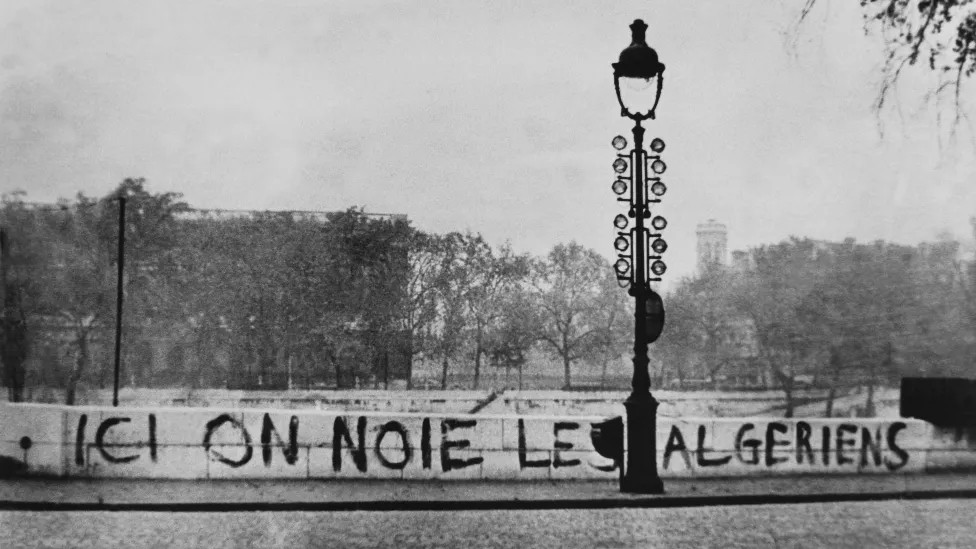
Graffiti on a bridge over the River Seine 1961: "Here we drown Algerians"
Perhaps the most grotesque incident symbolic of this societal reality was the massacre on the streets of Paris of hundreds of Algerians who came out in a peaceful demonstration in favor of the independence of their country in 1961. The Paris police attacked the protesters with lethal violence. Out of a total of around 300 killed, more than 100 were thrown into the Seine River. Media silence and total impunity prevailed. It took fifty years before then-President Francois Hollande, in 2012, could admit the facts of the horrific incident back in 1961. The Algerian War of independence ended in 1962 when the Evian Accords were approved by the French National Assembly and by a referendum of the population of Algeria. It is estimated that more than 900,000 French settlers who rejected the newly independent state moved to France.
The parallels between the Algerian war of independence and the Palestinian war of independence are many, from the hateful racism towards the native people in their own lands to the unlimited brutal genocidal violence deployed to destroy their ability to resist. The French authorities took decades to admit the reality of the war in Algeria. Similarly, the Israeli Zionist authorities, despite openly talking about wanting to expel the Palestinian population from their occupied lands, call their genocidal war of ethnic cleansing an anti-terrorist operation. The French armed forces could never defeat the Algerian resistance just as now the Israeli armed forces, the best equipped in the region, have not been able to defeat the Palestinian militias.
Like the French colonial authorities in Algeria, the Israeli Zionist authorities in Palestine routinely apply all kinds of torture, forced disappearance, displacement of families and arbitrary detention. In the same way that the news covered up these atrocities committed by the French forces during the war in Algeria, now the Western media minimize or completely omit the daily killing of children and the elderly, the destruction by the Israeli forces of hospitals and ambulances, the murder, detention and mistreatment of medical personnel, the deliberate murder of more than a hundred journalists and the massive scale of bombing that has destroyed more than 70% of the residential houses of the civilian population in Gaza.
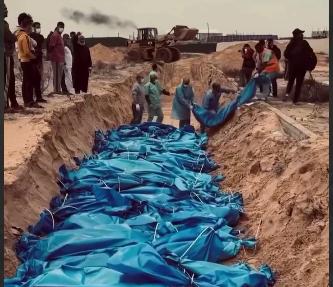
Víctims of Israeli bombings in Gaza are buried in mass graves
At a recent international conference on Palestine in Iran, Nicaraguan Foreign Minister Comrade Denis Moncada Colindres observed: "With the systematic mass destruction of homes and other civilian infrastructure, the Government of Israel is trying to force the Palestinian sisters and brothers not to return, not to return to their destroyed homes, so as to occupy the territory of Gaza and the West Bank to prevent the materialization of the Palestinian State. The Palestinian people are the victims of unimaginable atrocities that shock, dismay, and outrage the peoples of this planet. The atrocities committed by the Government of Israel against the Palestinian people in Gaza and the West Bank, against innocent children and defenseless women should be condemned, the Government and the People of Nicaragua strongly denounce and condemn it. The Government of Israel is turning itself into a state incompatible with the community of States that make up the United Nations.”
However, it has become as clear as possible that the International Criminal Court, a puppet entity of the Western powers, has done nothing to defend the Palestinian population despite multiple lawsuits filed against the Zionist government of Benjamin Netanyahu. Now the government of the fraternal people of South Africa has filed a strong lawsuit before the International Court of Justice based on the provisions of the Genocide Convention. It remains to be seen whether this important step to invoke international humanitarian law can stop the genocidal aggression against the Palestinian population by the Israeli authorities.
A fierce rearguard action can be expected from the United States and its satellite states to obstruct the legal process against the Israeli authorities and thus allow the Zionist regime to complete its project of ethnic cleansing in Palestine. The support of Western governments for the genocide of the Palestinian people follows the logic of European colonialism throughout the majority world over centuries, which was the precursor of genocidal Nazism in Europe itself. So it is natural for the United States and its European allies to promote fascism and racism, as they have done in the case of the Nazi regime in Ukraine and as they do now in the case of the Zionist occupying regime in Palestine.
From 2014 to date, Western governments have supported the Ukrainian authorities to attack what was once their own ethnic Russian population in the Donbass region. In the case of Donbass, the Russian Federation has acted to defend its population and reintegrate the region into Russian territory. In the case of Palestine too, the historical current goes against the Israeli authorities and their Western patrons in the same way that it went against the French colonial regime in Algeria. Sooner or later, there will have to be a peace agreement leading to an independent Palestinian state, just as the Evian accords of 1962 made possible the independence of Algeria.
Undoubtedly, the process towards this inevitable outcome will be marked by more violence, more suffering, temporary setbacks and momentary advances, prevarications and disappointments. But Palestinian independence will come, because, as Nicaragua’s Comandante Daniel and Compañera Rosario wrote in recent days in their greeting to the world’s peoples and governments, “The other World, the New One, the One of the Peoples, the Free One, the World free of Imperialism, Colonialism and Fascism, the bright Sun of that New Day, of Cooperation out of Salidarity, has now been born, and the Sacred Blood of millions of Martyrs and Heroes accompanies us, illuminating and nourishing New Horizons.”