Nicaragua
by its statues
Paul Baker Hernandez reflects on the meaning of some of Nicaragua's
public art:
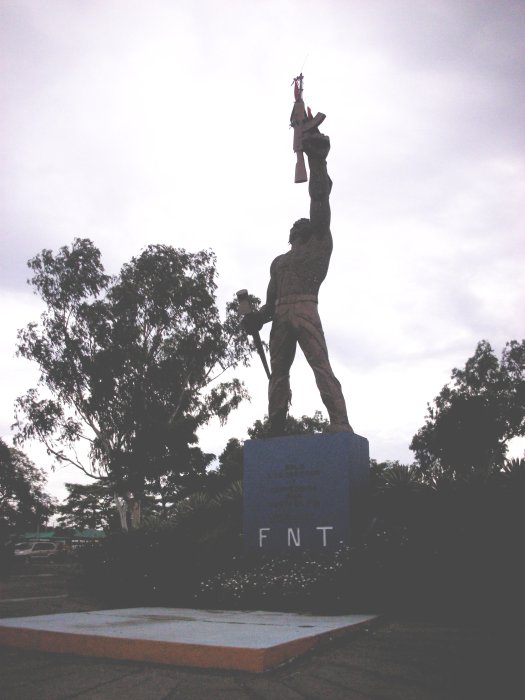 |
1.
1979. Revolution.
A gun
and a digging tool. Sandino said: "Only the
workers and the peasants will endure to the end."
And
he established a
self-sustaining community at Wiwilí: rooted in cooperation and the
land, it was his model for a sustainable Nicaragua.
In
these days of
belated realization of the catastrophe of Northern greed, he is a truly
global figure - his model vital for the very survival of the planet
under global warming. Somoza destroyed the Wiwilí community when he
murdered Sandino.
As
Cheney put it more recently, “The Amurican Way of
Life is not negotiable.” |
2. Post
Revolution Phase1.
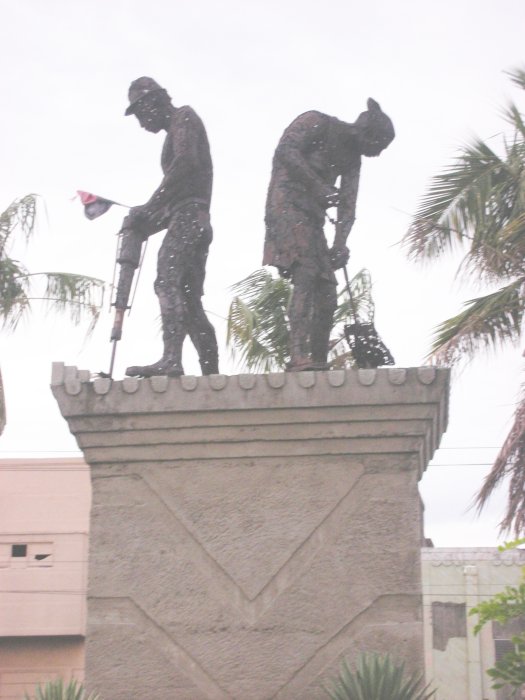
Workers
back in their proper place and attitude; no sign of Sandino.
|
3.
Post.Revolution Phase 2.
Woman
back in her place, barefoot, pregnant, on her knees.
In
the background, hidden by trees and a high wall, the ruins
of the 1972 earthquake that demolished the heart of Managua and killed
10,000 people.
Fixing
them up instead of making maudlin statues would
at least ensure that more families actually had ktchens. |
 |
4.Post-Revolution. Phase 3. The
Return of Religosity:
"Pilgrims will come from all over the the world to see these great
works of art," they said. The few that come, come to snigger. |
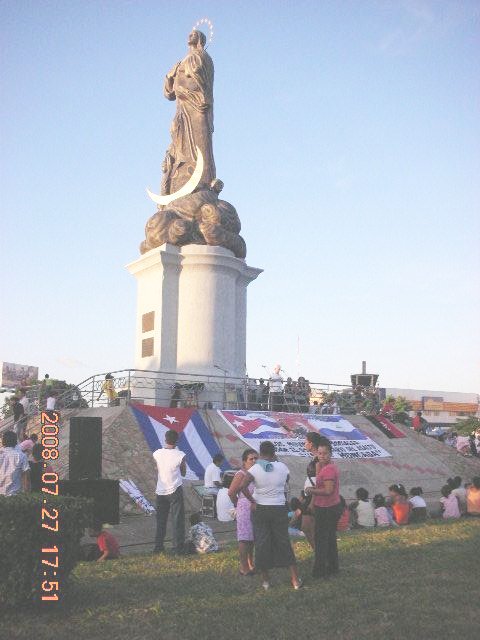
The first statue of the Virgin
had to be replaced: her off-balance pose
earned her the title of “Drunken Virgin". The second statue
is better,
marginally. Intriguingly, the photo is from an event to commemorate the
56th anniversary of the Moncada barracks in Cuba. Among other speakers,
Comandante Tomas Borge.
|
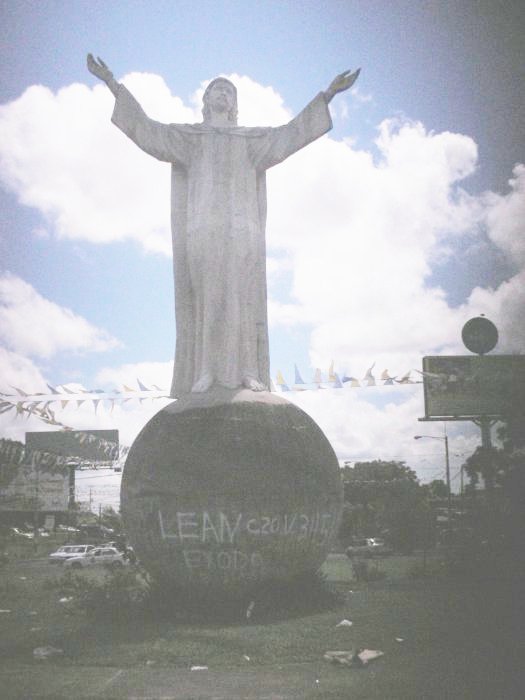
“Beach Ball Jesus” speaks for
Himself. Unfortunately. Some evangelical
literalist has sprayed "Check Deuteronomy" on the base. Presumably
referring to the command: “Thou shalt not make to thyself any graven
image". Vive la difference! As we gleefully sang at school: “You’ll
know they are Christians by their guns, by their guns ...”
|
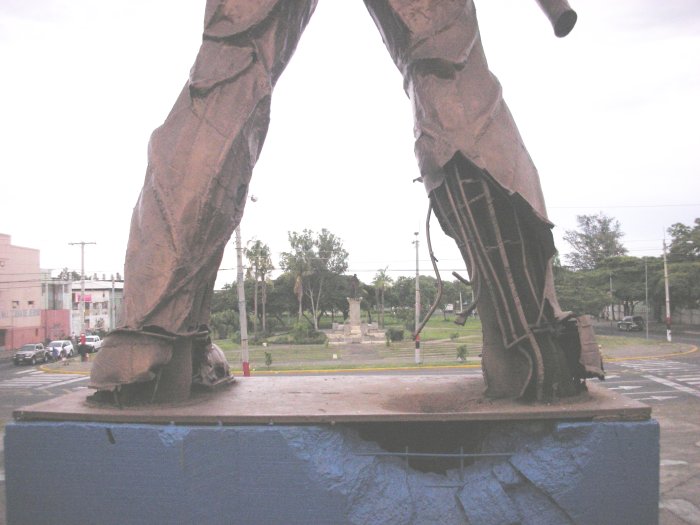
5.Revolution Post-Revolution.
View from the warrior peasant, which is located just up the road
from the newly re-constituted Revolutionary Square.
The statue of the newly
repressed workers is in front, and, beyond them, that of the pregnant
woman.
Despite attempts to blow it up, the statue still stands defiant
and proud. |
 |
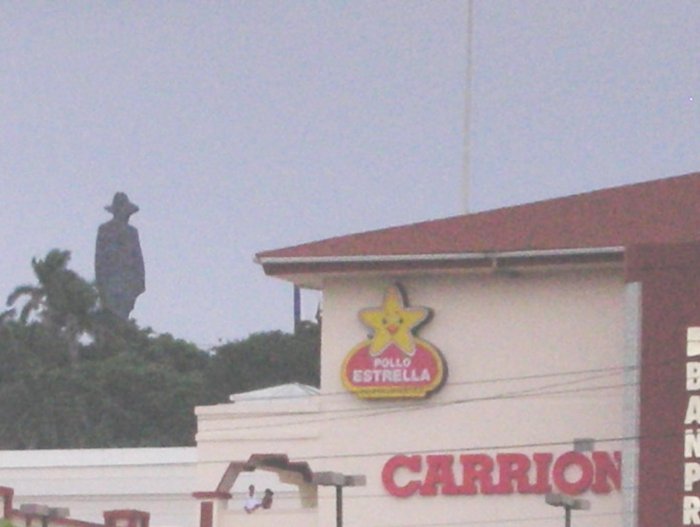 |
6. Sandino:
Bloodied but Unbowed.
The
Carrion store is aptly named.
Like vultures, carrion crows feed on dead animals, offal and road kill.
So "savage consumerism" is consuming itself. As he stands atop Somoza’s
last bunker, brooding over high water mark of consumerism’s
catastrophic stupidity within Nicaragua, Sandino offers us all a more
intelligent, sustainable, and indeed happy, way of life, reminding us
of the fate of all civilizations that get too big for their boots -
their roots in the Earth:
|
“I met a traveler from an
antique land
Who
said: ‘Two vast and
trunkless legs of stone
Stand
in the desert.... Near them, on the sand,
Half
sunk, a shattered
visage lies, whose frown,
And
wrinkled lip, and sneer of cold command,
Tell
that its sculptor
well those passions read,
Which
yet survive, stamped on these lifeless things,
The
hand that
mocked them, and the heart that fed.
And
on the pedestal these words appear:
'My
name is Ozymandias, King of Kings:
Look
upon my works, ye Mighty,
and despair!'
Nothing
beside remains. Round the decay
Of
that colossal wreck,
boundless and bare
The
lone and level sands stretch far away.”
P.B.Shelley.
|